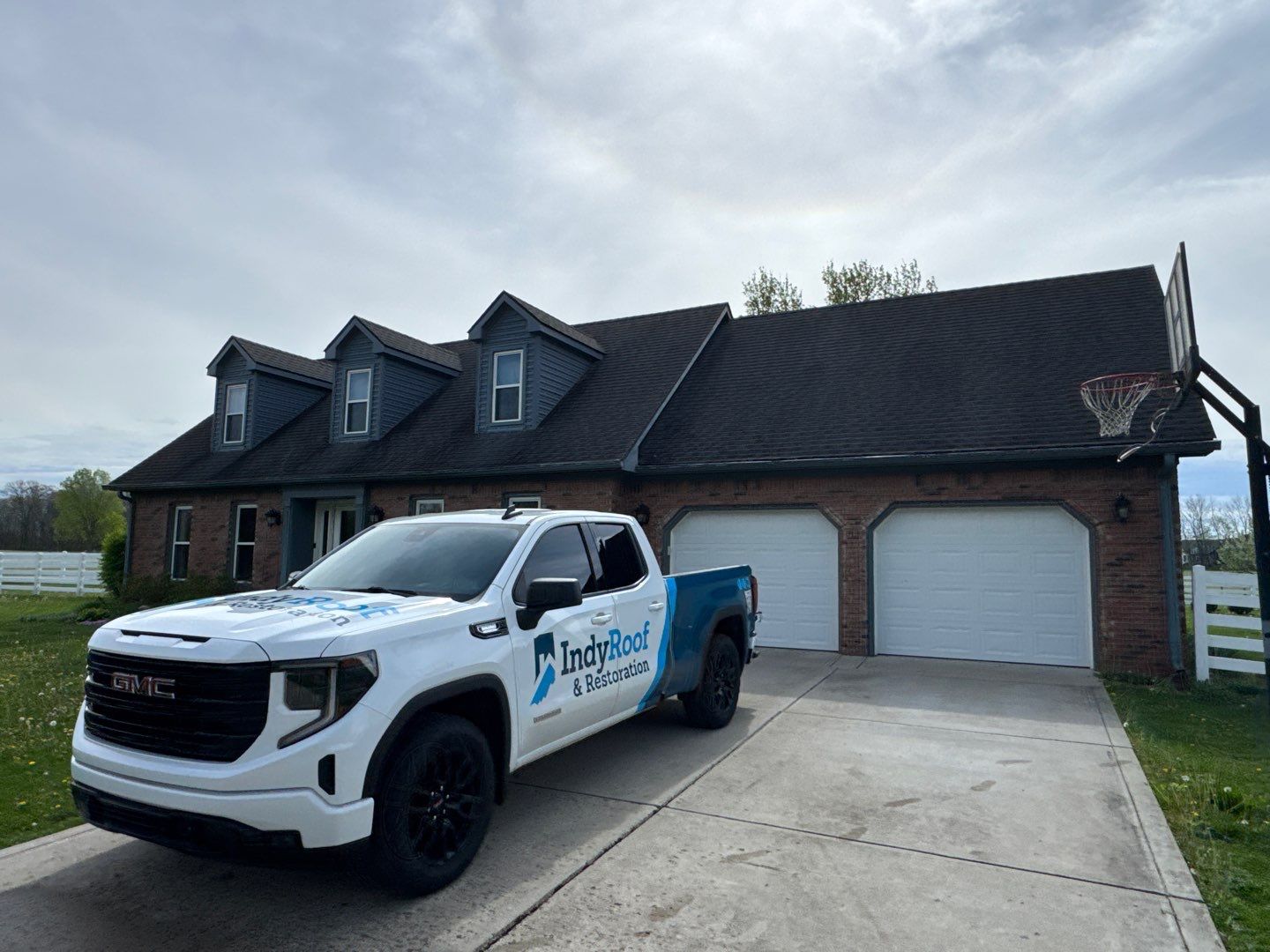
How much does a roof replacement cost?
It varies widely by roof and material. To give a sense of scale, a typical asphalt roof replacement on an average home often falls in the broad range of roughly $8,000 to $20,000 or more, with smaller or simpler roofs lower and larger or premium ones higher. Metal, tile, and slate cost considerably more than asphalt. These are general ranges, not quotes. For a Fountaintown homeowner, the only way to know your real cost is a measured estimate on your specific roof, since size, complexity, and condition all affect the price.
How do roofers calculate the cost?
Roofers measure the roof in squares, each equal to a hundred square feet, and price based on the material, the labor, and the roof's complexity and pitch. They factor in tear off and disposal of the old roof, underlayment and new roofing, flashing and ventilation, any decking repair, permits, and cleanup. Steeper and more complex roofs cost more in labor. For a Fountaintown homeowner, the cost is built from these components as they apply to your roof, which is why a measured estimate is needed rather than a flat figure.
Does the material change the cost a lot?
Yes, significantly. Asphalt is the most affordable, often roughly $4 to $7 per square foot installed, while metal frequently runs around $10 to $16 or more, and tile and slate $15 to $30 or more, reflecting the materials and specialized labor. The pricier materials last far longer, so the higher upfront cost can be reasonable over time. For a Fountaintown homeowner, material is one of the biggest factors in the price, and it is worth weighing cost against lifespan, since a more durable roof may cost less per year despite the higher upfront figure.
Is it cheaper to repair than replace?
Yes, a repair costs far less than a replacement, so for isolated damage on a roof with life left, repairing is the economical choice. The calculation changes for a roof near the end of its life or with widespread problems, where repeated repairs add up and a replacement, though more expensive, delivers a full lifespan roof. For a Fountaintown homeowner, the decision depends on the roof's age and the extent of the issues, and a roofer's honest assessment of whether a repair will hold is what determines which option makes financial sense.
Is the cheapest quote a good idea?
Not necessarily. A very low quote can signal cheaper materials, less experienced labor, a weaker warranty, or omitted work that surfaces later as problems or extra costs. A roof is a long term investment, and quality installation is what makes it last. The better approach is to weigh cost against materials, warranty, workmanship, and the contractor's reputation. For a Fountaintown homeowner, choosing on value rather than the lowest number usually means a roof that lasts longer and costs less per year, which is the figure that genuinely matters over the life of the roof.
Can I finance a roof replacement?
Yes, financing is commonly available, whether through contractors, home improvement loans, or other means, and it can make a needed roof manageable by spreading the cost over time. Many contractors offer or can point to financing options. Where possible, budgeting ahead by setting aside funds as the roof ages is ideal, but when the need is immediate, financing keeps a failing roof from going unaddressed. For a Fountaintown homeowner, knowing that paying over time is an option means a necessary replacement does not have to wait until the full amount is saved.
How much does decking repair add?
It depends on how much decking is damaged, which often cannot be known until the old roof is removed. Replacing a few sheets adds a modest amount, while widespread rot adds more, and it is typically priced per sheet of plywood or board. A reputable contractor notes the possibility in the quote and shows you the damaged wood before replacing it. For a Fountaintown homeowner, decking is the most common source of a cost difference from the base quote, so budgeting a buffer for it is wise, even though many roofs need little or none.
What hidden costs should I watch for?
The most common is decking replacement, since rotted wood is often discovered only after the old roof is removed and is priced per sheet. Other potential add ons include ventilation upgrades, ice and water protection in vulnerable areas, skylight replacement, and structural repairs. A reputable contractor flags likely ones upfront and notes them in the quote. For a Fountaintown homeowner, asking what add ons might apply, especially decking, and budgeting a buffer for them, prevents the base quote from being misleading and keeps the real total from coming as a surprise.
What is included in a roof replacement quote?
A complete quote should cover tear off and disposal of the old roof, underlayment and the new roofing material, flashing and ventilation components, labor, cleanup, and usually the permit. A good quote also specifies the material, the grade, and the warranty, and notes possible add ons like decking replacement. Vague lump sum quotes make comparison hard. For a Fountaintown homeowner, asking for an itemized quote that lists each component is the best way to understand exactly what you are paying for and to compare contractors on equal footing.
What is a roofing square and how does it affect cost?
A roofing square is a hundred square feet of roof area, the unit roofers use to measure and price. A typical home might have twenty to thirty squares or more, and the cost per square depends mainly on the material and labor. More squares mean a higher total, and the pitch raises the square count since a steeper roof has more surface than its footprint. For a Fountaintown homeowner, understanding the square explains why larger and steeper roofs cost more and makes per square comparisons between quotes meaningful.
How do I get an accurate cost for my roof?
Schedule a measured estimate. A roofer assesses your roof's size, pitch, material, complexity, and condition and provides a specific figure, ideally itemized so you can see what it covers. This is far more accurate than online averages, which cannot account for your particular roof. Getting more than one detailed estimate also lets you compare. For a Fountaintown homeowner, a measured estimate on your actual roof is the only way to turn the general ranges into a real number you can budget around, and most contractors provide it without obligation. Until you have that figure, treat any number you have seen as a rough placeholder rather than your actual cost.
Why do roofing quotes vary so much?
Because contractors differ in the materials and grades they use, what they include in the base price, their overhead and warranties, and how they assess the roof, including expected decking replacement. A higher quote may reflect better materials, a stronger warranty, or more thorough work, while a much lower one may omit items or cut corners. For a Fountaintown homeowner, the way to make sense of varying quotes is to compare what each one actually includes, line by line, rather than judging on the total alone, since similar looking bids can cover very different work.